

Here's What Western Founders Keep Getting Wrong About Asia
On the 22nd of July 2026, a startup society in Johor got its license pulled.
I'm Malaysian, so this one isn't abstract for me. Network School, the physical experiment behind Balaji Srinivasan's "network state" idea, had spent the better part of two years in Forest City, a half-empty island development near Singapore that most of us quietly call a ghost city. For a while it looked like a rare good-news story. A few hundred founders and engineers from seventy-odd countries, paying to live together, lift weights, build things, and put some life into a place that badly needed it. A federal minister even dropped by and posted warmly about it. Then, in the span of a week, the thing was under investigation and ordered to stop operating.
You can read the shutdown as a geopolitics story, and plenty of people are. I want to read it as a business story, because the mistake underneath it is one I watch Western founders make in Asia over and over, and it has almost nothing to do with any single controversy.
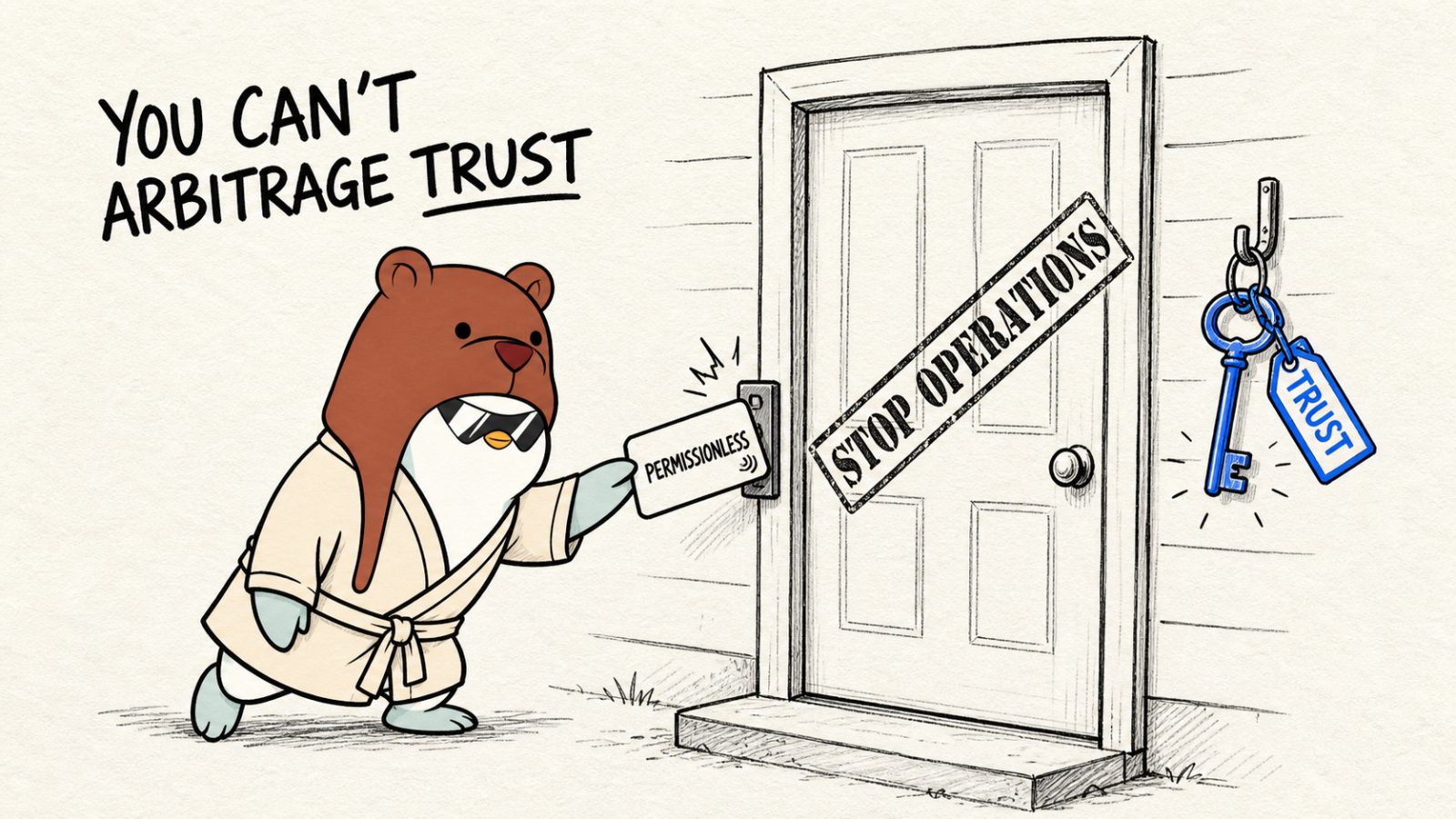
The mistake fits in one word: permissionless.
The whole network-state pitch is built on that word. The dream is software-shaped, opt-in communities that route around slow, legacy nation-states the way a startup routes around a lazy incumbent. It is a genuinely interesting idea, and Balaji is no fool; he is a former a16z partner who wrote the book on it. But permissionless is a posture long before it is a mechanism, and that posture does not survive contact with this part of the world.
Because Asia runs on permission, and the permission is earned.
Sovereignty here is not friction to be engineered away. It is the ground you are standing on. The moment a project starts to behave as if it sits above the local law, the ending is already written; you just don't find out until the paperwork catches up. By the authorities' own account, most of Network School's residents had valid documents when the immigration checks came. It didn't save them, because the problem was never really the checklist. It was the stance behind it.
There is also an order of operations that outsiders reliably get backwards. The Western reflex is to raise, scale, and apologize later, on the theory that forgiveness is cheaper than permission. Here you do the slow part first. You build the relationship, you earn a little face, you let people who are trusted vouch for you, and only then are you allowed to grow. Walking through the door pitching fast-track visas and a nine-figure expansion before anyone has decided they trust you isn't boldness. It is the sequence run in reverse, and locals feel it immediately, even the ones who couldn't tell you why.
The way friction gets resolved is the part that catches even sharp operators. When the pressure arrived, the standard San Francisco playbook came out with it. Go public. Message the Prime Minister directly for a "deal." Let it be known that the community has options and could always relocate somewhere more welcoming. In the Valley that reads as leverage. In Malaysia it reads as a guest raising his voice inside someone else's home. Things in this region get sorted quietly, through people who know people, on a clock that nobody announces out loud. The more publicly and transactionally you push, the louder you broadcast that you never understood where you were.
And then there are the lines. Every country keeps a few of them, matters that are simply not open to a visiting founder's debate. You don't need to personally agree with a country's red lines to grasp the point that matters commercially: you are operating on someone else's soil, under their rules, at their invitation. That isn't a tax on the business. In a world that is fragmenting rather than flattening, it is close to the whole job. The foreigners who do well in Asia are rarely the ones with the cleverest corporate structure. They are the ones who understood on day one that they were guests, and behaved accordingly for years.
I don't want this to land as a dunk on one man or one project, because that would miss it. Network School brought real energy and real money into a place starved of both, and a lot of Malaysians genuinely wanted it to work. Nor is this a uniquely Asian lesson. You would learn some version of it trying to build in Japan, or the Gulf, or a small town in France. It's only that the "move fast, stay permissionless, treat sovereignty as optional" worldview and the instincts of this region are close to a perfect mismatch, which is why the collision here was unusually clean and unusually public.
What is worth sitting with is the specific thing that got skipped. You can vibe-code a working product over a weekend now. You can turn a few thousand dollars of tokens into an ocean of content. You can lift an entire community and set it down in a new country before the month is out. Nearly everything that used to be scarce has become cheap and portable at the same time. Trust is the holdout. It is slow, it is earned face to face, and it is the one asset left with no shortcut, no API, and no arbitrage.
The West optimizes for permissionless. We run on permission.
Learn the difference before you land, not after they shut you down.